
The Big Picture
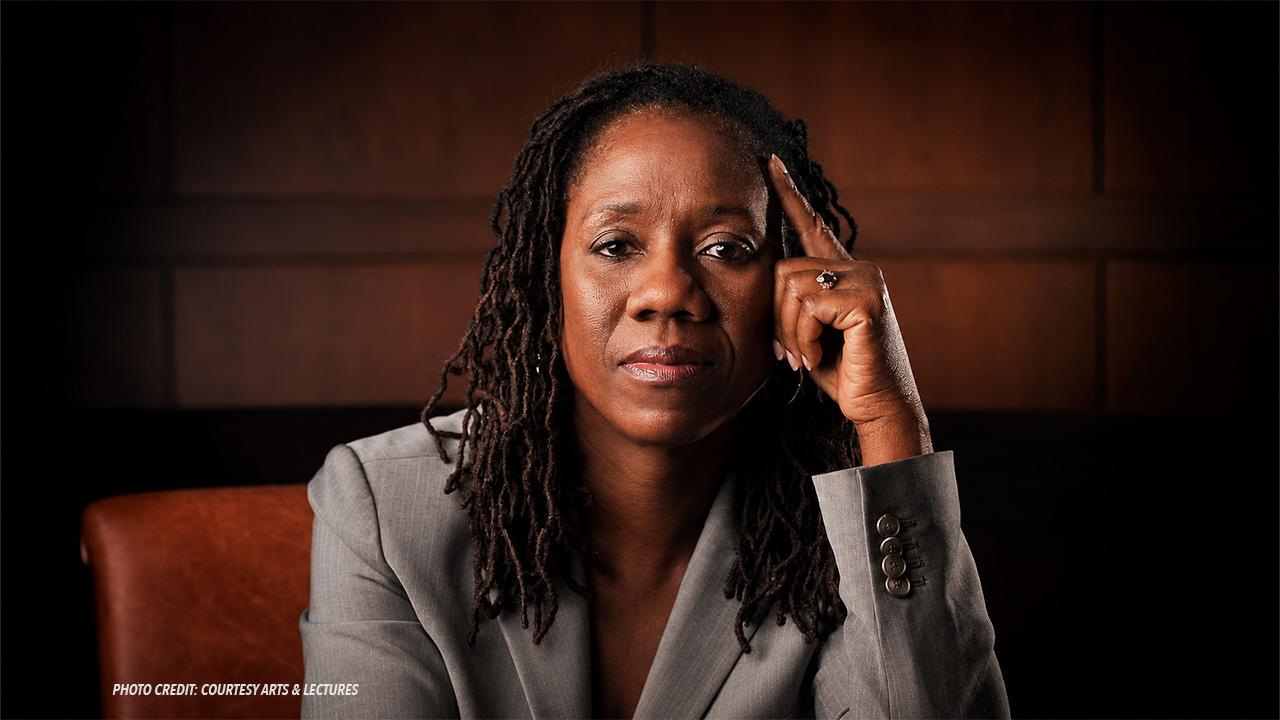
The Voting Rights Act of 1965 was designed to protect one of the most basic rights in a democracy: the right to vote. In a recent conversation on The Daily Show, civil rights attorney Sherrilyn Ifill explained that the law has been weakened over time by Supreme Court decisions that removed key protections once used to stop voter discrimination. Her warning was direct: the Voting Rights Act still exists in name, but much of its enforcement power has been stripped away.“The Voting Rights Act was once a shield. Now, much of that shield has been weakened.”
Why the Voting Rights Act Was Needed
After the Civil War, the United States passed constitutional amendments meant to protect freedom and citizenship:
Reconstruction Amendments
13th Amendment
Ended slavery.
14th Amendment
Guaranteed citizenship and equal protection under the law.
15th Amendment
Prohibited denying someone the right to vote because of race, color, or previous condition of servitude.
For a short period after the Civil War, Black Americans voted, held office, and helped shape government. But that progress was soon attacked.
How Black Voting Power Was Suppressed
Southern states created barriers that made it difficult or impossible for many Black citizens to vote.
These included:
- Poll taxes
- Literacy tests
- Grandfather clauses
- Racial intimidation
- Mob violence
- Violence from the Ku Klux Klan
These tools often did not openly say they were designed to stop Black people from voting. But their purpose and impact were clear.
“Discrimination did not always announce itself. Often, it hid behind rules that looked neutral on paper.”
The 80-Year Gap
Ifill explained that after Reconstruction, many Black citizens in the South were blocked from voting for roughly 80 years.
That exclusion continued until the Civil Rights Movement forced the nation to act.
The march across the Edmund Pettus Bridge, the violence faced by voting rights demonstrators, and the national outrage that followed helped lead to the passage of the Voting Rights Act in 1965.
The Impact of the Voting Rights Act
The Voting Rights Act changed American politics.
When the law passed in 1965, Ifill said there were only:
72 Black elected officials
in the entire United States.
By 1980, that number had grown to about:
1,500 Black elected officials
That growth showed the power of the law. It did not simply declare that discrimination was wrong. It gave people tools to fight it.
“The Voting Rights Act did not just open the door. It gave communities the power to keep that door from being slammed shut again.”
The Two Key Sections: Section 5 and Section 2
Section 5: Stopping Discrimination Before It Happened
Section 5 was one of the strongest parts of the Voting Rights Act.
It required certain states and local governments with histories of voting discrimination to get federal approval before changing voting laws or election procedures.
This process was called:
Preclearance
That meant covered jurisdictions had to receive approval before making changes such as:
- Redrawing district lines
- Changing voting procedures
- Eliminating elected offices
- Reducing the number of elected positions
- Making other election-related changes
The purpose was simple: stop discriminatory laws before they could harm voters.
“Section 5 worked like an alarm system. It caught discriminatory changes before they could take effect.”
What Happened to Section 5?
Section 5 operated from 1965 until 2013.
In 2013, the Supreme Court’s decision in Shelby County v. Holder weakened Section 5 by removing the practical force of preclearance.
Ifill explained that after that decision, states no longer had to seek advance federal approval before changing voting rules.
She connected that change to a rise in voter ID laws and other voting restrictions over the last decade.
Section 2: Challenging Discrimination After It Happened
After Section 5 was weakened, Section 2 became even more important.
Section 2 allowed people to challenge voting laws or district maps after they were adopted if those laws had a discriminatory effect.
The key word is:
Effect
That means plaintiffs could focus on what a law did, not just what lawmakers claimed they intended.
Why the “Effects Test” Mattered
In 1982, Congress amended Section 2 to make clear that people challenging voting discrimination did not have to prove racist intent.
Instead, they could show that a voting law or map produced discriminatory results.
This was important because modern discrimination often does not say openly, “This is meant to harm Black voters.”
A law can appear neutral but still weaken Black voting power.
“Intent is hard to prove. Impact is easier to measure.”
What Ifill Says the Supreme Court Has Done Now
Ifill argued that the Supreme Court has now weakened Section 2 by moving the law back toward an intent-based standard.
That means voters may have to prove that lawmakers intended to discriminate, rather than showing that a law or map has a discriminatory effect.
That is a major shift.
The Practical Problem
If voters must prove intent, many discriminatory systems may survive because lawmakers rarely admit racial motives.
If voters can prove effect, courts can examine the real-world outcome.
Why This Matters for Redistricting
Vote Dilution Explained
One of the major issues in the conversation was redistricting.
Redistricting is the process of drawing political district lines.
Vote dilution happens when Black voters or other minority communities are split apart or packed into districts in ways that weaken their political voice.
For example:
Splitting
Black voters are divided across several districts so they cannot form a strong voting bloc in any one district.
Packing
Black voters are concentrated into one district, reducing their influence in surrounding districts.
Section 2 was designed to help challenge these kinds of practices.
“The question is not whether Black candidates are guaranteed office. The question is whether Black voters have a fair chance to elect their candidates of choice.”
This Is Not About Quotas
Ifill rejected the argument that the Voting Rights Act creates racial quotas.
She explained that the law does not guarantee Black elected officials.
Instead, it protects Black voters’ opportunity to elect candidates of their choice.
That requires evidence, including proof of racially polarized voting.
In other words, courts must examine voting patterns, election data, and whether the political system gives minority voters a fair opportunity to participate.
The Role of Segregation
Ifill also explained that majority-Black voting districts do not appear by accident.
They are often possible because housing patterns in America were shaped by segregation and discriminatory policies.
That history matters because political maps are built around where people live.
So when courts question race-conscious remedies, they are often dealing with communities shaped by earlier racial discrimination.
“The geography of voting power is tied to the geography of segregation.”
Partisan Gerrymandering: The Other Problem
Ifill also discussed partisan gerrymandering.
Partisan gerrymandering happens when political maps are drawn to help one party keep or gain power.
She explained that the Supreme Court has largely allowed extreme partisan gerrymandering to remain outside federal court oversight.
That creates a dangerous opening.
A state can defend a map by saying it is protecting a political party or an incumbent, even if the result also weakens Black voting strength.
Why the Supreme Court Matters
A major theme of Ifill’s explanation was the power of the Supreme Court.
According to her, the Court has weakened both major enforcement tools of the Voting Rights Act:
Section 5
Weakened in 2013 by removing the practical force of preclearance.
Section 2
Now weakened by making it harder to challenge discriminatory effects.
That means communities have fewer protections before discriminatory laws take effect and fewer tools after those laws are passed.
The Numbers to Remember
1965
The Voting Rights Act was passed.
72
The number of Black elected officials in the United States when the law passed.
1,500
Approximate number of Black elected officials by 1980.
1982
Congress amended Section 2 to allow challenges based on discriminatory effects.
2013
The Supreme Court weakened Section 5 in Shelby County v. Holder.
1965–2013
The period when Section 5 preclearance operated as a major protection.
What Comes Next?
Ifill said the path forward is difficult, but necessary.
She identified several steps:
1. Overwhelming Voter Participation
She argued that people must vote in large enough numbers to overcome barriers and tilted systems.
2. Congressional Action
Congress would need to pass new voting rights protections.
3. Action on Gerrymandering
Lawmakers would need to address partisan gerrymandering and its impact on democratic representation.
4. Supreme Court Reform
Ifill also said there must be a serious conversation about reforming the Supreme Court so that it is committed to maintaining democracy.
The Bottom Line
The Voting Rights Act was once one of the most powerful civil rights laws in American history.
It helped move the country from widespread exclusion to broader representation. But according to Sherrilyn Ifill, the law has been steadily weakened by court decisions that make it harder to stop voting discrimination before it happens and harder to challenge it after the fact.
The issue is not only legal. It is democratic.
Who gets to vote?
Whose votes count?
Who gets represented?
And what tools remain when the rules are changed to weaken a community’s political voice?
“The fight over the Voting Rights Act is really a fight over whether democracy can protect the people it once excluded.”
This article was derived from the interview of Sherrilyn Ifill – What Happened to the Voting Rights Act? on The Daily Show. https://www.youtube.com/@TheDailyShow

